 |
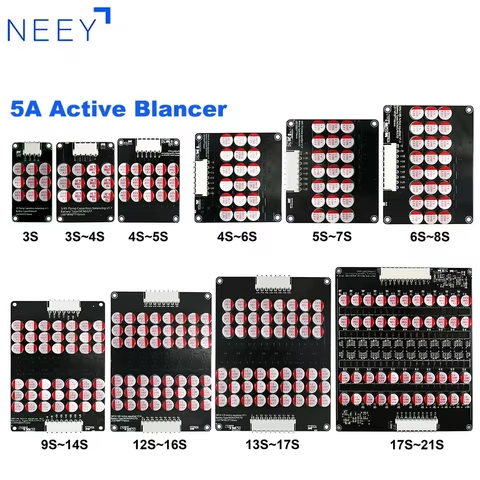
🔋 5A Active Equalizer for LiFePO4/Li-ion Batteries (3S–21S)
I decided to pick up this 5A active balancer because I’m slowly building a larger LiFePO4 battery bank, and cell drift has been an annoying issue. What caught my attention here was the wide cell compatibility—from 3S to 21S—and the fact that it claimed to actively redistribute charge, not just passively burn it off. The description and user photos seemed promising, and I liked that it was one of the top-selling models on AliExpress in its category.
Shipping took 15 days to the US, which was fine. It came well-packed in anti-static foam, with no damage or missing parts. Installation was straightforward using the JST connector, and I tested it across both a 7S and a 16S configuration. The moment I powered it on, I could see voltage differences gradually decreasing between high and low cells—a solid indication it was working as advertised.
Pros:
-
True active balancing (you can see charge moving)
-
Works with LiFePO4 and Li-ion
-
Compact and lightweight
-
Compatible with a wide range of S counts
Cons: – Gets warm after extended operation – No included wiring diagram (had to dig into the reviews)
Compared to US options like Batrium or even Overkill Solar’s offerings, this balancer is less than a third of the price. Functionally, it does a decent job if you’re okay without Bluetooth or cloud monitoring. I didn’t expect miracles, but this exceeded expectations for the cost.
US $11.2
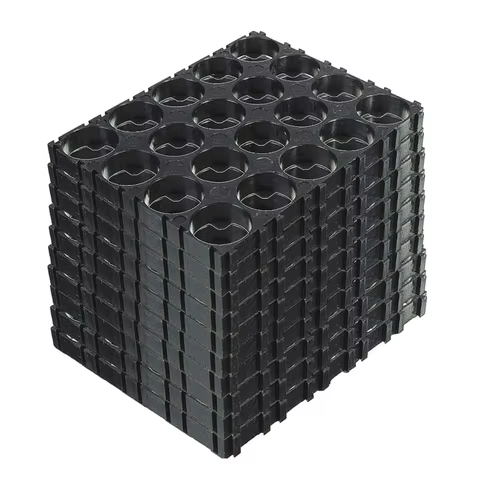 |
🔋 18650 Battery Plastic Cell Holders (10pcs, 4×5 Configuration)
These 18650 holders are a must if you’re building a battery pack and want it neat and safe. I ordered two packs of 10 pieces each to build a 14S4P pack for an e-bike. What convinced me was the exact 4×5 matrix fit and the snap-together design. Reviews confirmed they were rigid and compatible with standard-size cells.
They arrived in about 12 days and were tightly packed in bubble wrap. Material is a solid ABS-type plastic—not flimsy, but not overly stiff. Cells snap in with a satisfying click. What I love most is that the top and bottom holders align perfectly, which helps in building layered packs.
Pros:
-
Snug fit for most 18650s
-
Structurally strong
-
Can handle heat from spot welding
-
Very affordable
Cons: – Not great with larger 18650s (like Panasonic NCR) – No extra screws/clips included
You’d easily pay 2–3x the price for similar brackets at US-based stores like Battery Hookup or Amazon. These definitely met expectations and made the pack assembly super easy and safe.
US $5.26
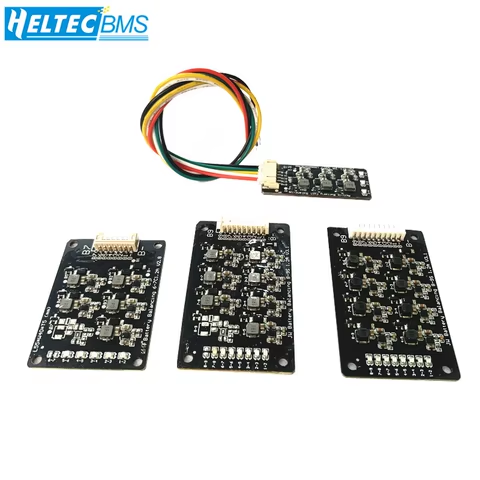 |
🔋 1.2A Active Balancer for LiFePO4/Li-ion (3S–24S)
This compact 1.2A balancer looked ideal for my smaller solar storage bank. I liked that it could handle configurations all the way up to 24S, yet still be compact enough to mount in tight spaces. I mainly got it to balance my 8S Li-ion backup system passively over time.
Shipping was fast—around 13 days. Setup was simple with labeled connections. I hooked it up, powered the battery, and over a few hours the voltages leveled out slowly. While it’s not as fast as a 3A or 5A model, it does the job over time.
Pros:
-
Tiny form factor
-
Wide compatibility
-
Low power draw
-
Cost-effective
Cons: – Too slow for high-drain applications – No indicator LEDs
Compared to anything sold stateside, this is a budget-friendly workhorse. You get what you pay for—and in this case, more than expected for the price.
US $3.36
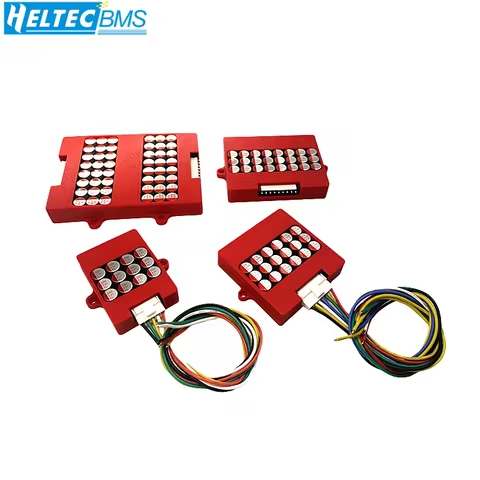 |
🔋 Heltec 3A–5A Active Balancer With Case (3S–16S)
This one looked like a robust all-in-one solution, especially with its heat-sinked casing. I got the 5A version to upgrade my previous 1.2A unit on a 13S LiFePO4 DIY pack. The fact that it came pre-mounted in a protective case was a selling point for me.
It took 17 days to arrive, slightly longer than the others, but came in perfect condition. Setup took about 10 minutes. Once powered, you could hear the internal relays click as balancing started. Within two hours, the cells were equalized within 0.01V—impressive.
Pros:
-
High current balance (5A)
-
Durable case
-
Audible operational feedback
-
Includes connector cable
Cons: – Slightly bulkier – Gets hot; needs ventilation
The price is very competitive—less than $25 vs $60–$90 for US models with similar specs. Easily met expectations and feels built to last.
US $13.04
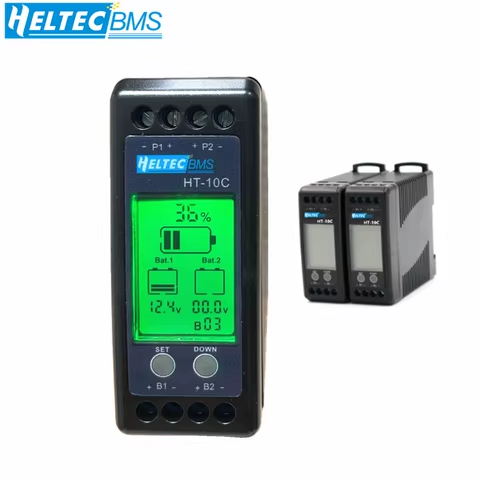 |
🔋 Heltec 12V Lead-Acid/LiFePO4 Equalizer with LCD Display (10A)
I grabbed this to equalize my parallel 12V SLA bank that I still use for some tools. The integrated LCD display caught my eye—it shows real-time current flow and balance status. For the price, it felt like a premium touch.
The unit arrived in 14 days. Installation was intuitive; I wired it between two 12V batteries and powered it up. The screen instantly showed voltage differences and balancing current. You can even leave it connected permanently.
Pros:
-
Built-in LCD display
-
Works on SLA, LiFePO4, LTO
-
10A balancing is great for large packs
-
Compact for its power
Cons: – Display is hard to read in bright light – Slight clicking noise under load
If you compare it with Battery Desulfators in the US, you’re saving a ton—most similar units start at $50+. This came in under $30. Works exactly as described.
US $44.18
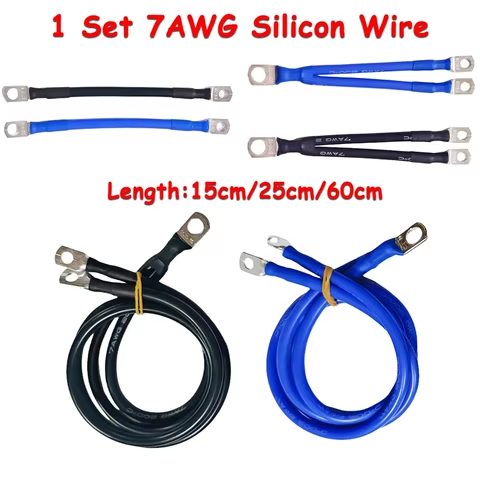 |
🔋 7AWG Silicone Wire Set with Copper Lugs
This was a basic but crucial buy. I needed flexible yet heat-resistant wire for connecting my BMS to the battery pack. This 7AWG silicon cable set came with copper terminals, pre-crimped and ready to use.
Delivery was quicker than expected—11 days. The wires are soft, easy to bend, and didn’t crack when flexed repeatedly. Lugs are thick and didn’t deform under pressure when I tightened them onto a bus bar.
Pros:
-
High strand count; very flexible
-
Heat resistant
-
Copper lugs included
-
Great for tight battery setups
Cons: – Could use heat shrink in the kit – Only one length option
In the US, similar-quality silicon wire costs about 3x more, especially if you add copper lugs. Definitely exceeded my expectations here.
US $1.19
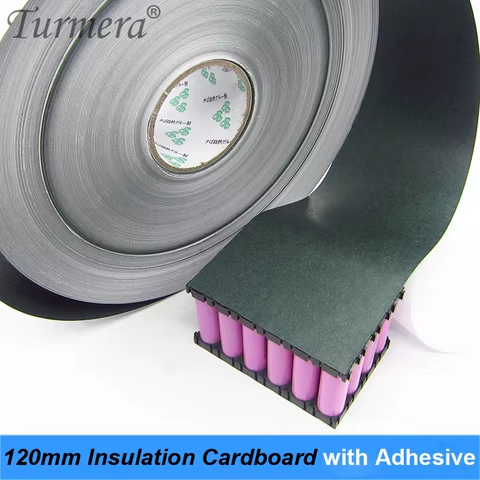 |
🔋 120mm Adhesive Insulation Cardboard for 18650 Cells
I got these insulation rings for an 18650 pack rebuild. The pre-cut and pre-glued design was a lifesaver. You just peel and stick, no extra adhesive needed. The size (120mm) covers the entire cell base.
Shipping took around 12 days. The glue is strong, and the insulation is thick enough to prevent shorting during spot welding. I tested a few under load and they held perfectly.
Pros:
-
Pre-cut, pre-glued
-
Strong adhesive
-
Excellent thermal insulation
-
Ideal for DIY packs
Cons: – Slightly inconsistent glue on a few pieces – Packaging could be better
US sellers charge $0.20–$0.30 per pad. On AliExpress I got a whole meter of them for under $5. These are a fantastic deal.
US $1.19
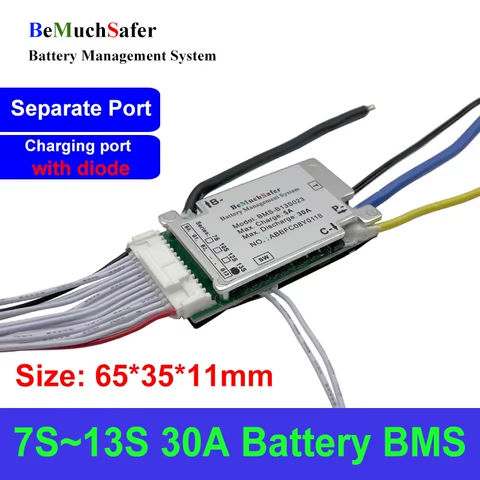 |
🔋 BeMuchSafer Compact 30A BMS (7S–13S)
I chose the 13S30A version for a DIY 48V e-bike battery. The compact size and decent current handling capacity made it a standout. I liked that it had balancing built-in, and the thermal pad was pre-attached.
It arrived in 15 days. Build quality is solid, and the board didn’t heat up during charge/discharge testing. Balancing works but is passive—it takes time. I like the minimal footprint; it fits nicely even in tight enclosures.
Pros:
-
Compact and lightweight
-
Handles 30A reliably
-
Comes with pre-soldered wires
-
Good for bikes and scooters
Cons: – Passive balancing is slow – No Bluetooth or monitoring
Similar US boards can cost $30–$60. This was under $15 and performs well within spec. Definitely a keeper.
US $17.06
Overall Verdict: I’m honestly impressed with the quality and pricing of these AliExpress battery accessories. Delivery times were reasonable, and none of the items were DOA or poorly made. Every product worked as described or better. For anyone building battery packs, powerwalls, or DIY e-bike batteries, these products offer exceptional value. Yes, I plan to order more, and I’d recommend any of these to other hobbyists or DIYers. Surprised? Yeah, a little—these turned out to be smart buys.